
AI Virtual Staging ROI for UK Estate Agents
Empty rooms slow interest. AI virtual staging can transform vacant listings at a fraction of traditional staging cost — if you measure the right returns and disclose properly.

Key Takeaways
- ROI is usually about speed and engagement, not only shaving the final sale price.
- AI staging is best for vacant, void and poorly furnished rooms — not every photo in a lived-in home.
- Always disclose virtual staging; trust is part of the return.
- Measure portal metrics and days-on-market, not vanity before/after likes alone.
- Combine staging with decluttering and a strong first image for compounding gains.
Empty rooms photograph honestly — and often unkindly. Without furniture, proportions feel uncertain, living spaces look smaller, and buyers struggle to imagine life inside the walls. Traditional staging fixes that with vans, sofas and invoices. AI virtual staging fixes many of the same problems with software.
For UK estate agents, the question is not “does staging look nice?” It is “does it return more than it costs?” This article breaks down where AI staging pays, how to measure it, and how to stay on the right side of disclosure. For the broader comparison with physical staging, see virtual staging vs traditional staging.
What ROI means for staging
In agency, return rarely shows up as a single neat line on a spreadsheet. Useful ROI signals include:
- Higher click-through from portal search results
- More viewings per week in the first fortnight
- Shorter days on market
- Stronger vendor confidence at appraisal
- Fewer “it looked tiny online” objections
- Ability to market voids without waiting for furniture
Price uplift can happen, but it is harder to isolate. Optimise for momentum and clarity first.
The cost side of the equation
Traditional staging
Physical staging costs scale with rooms, access, duration and logistics. For many mid-market instructions, full-home staging is commercially awkward: the vendor resists the fee, or the agency absorbs a cost that only makes sense on premium stock.
AI virtual staging
With tools such as Virtual Staging in ReHub Studio, you furnish rooms from photographs. Typical advantages:
- No delivery or collection
- Hours instead of days
- Easy to restyle if the first look misses
- Works for multiple rooms without multiplying van visits
When the unit cost is low, you can stage more listings — which is where portfolio-level ROI appears.
Where AI staging pays fastest
Vacant vendor-owned homes. The classic use case. Empty reception rooms become readable living spaces.
Probate and investment voids. Often unloved and unfurnished. Staging plus decluttering can rescue first impressions.
New builds and show-home gaps. Offline plots need warmth before finishes feel complete. See new-build marketing with AI staging.
Tenanted homes with sparse furniture. Selective staging of one or two key frames can help — but never misrepresent belongings you cannot remove in reality without agreement.
Branch window and social creatives. Staged hero rooms outperform empty shells in paid and organic posts.
Where ROI is weaker
- Already well-furnished, photogenic homes
- Tiny utility spaces nobody buys on emotion
- Exteriors (use photography and twilight instead)
- Listings where price or location — not presentation — is the blocker
Do not stage for the sake of using the tool. Stage where emptiness is the bottleneck.
A simple ROI model you can run in-branch
For the next ten vacant listings:
- Record baseline: first-week views, viewings booked, portal favourites.
- Stage the main living space and principal bedroom.
- Keep disclosure clear on every staged frame.
- Compare first-week metrics with ten similar vacant listings from the previous quarter.
- Add soft metrics: vendor comments, appraisal conversion when you show samples.
Even directionally, most teams see whether staging is moving the needle within a month.
Disclosure is part of the return
A short-term click bump that creates viewing disappointment is not ROI — it is reputational debt.
Best practice:
- Label virtually staged images in the gallery
- Mention digital furnishing in the description where appropriate
- Keep architecture, windows and permanent fixtures truthful
- Avoid inventing extensions, views or fireplaces that do not exist
Ethical staging sells the potential of the room. Dishonest staging sells a different property.
Compound the gain with the rest of the package
Staging works harder when the listing fundamentals are already strong:
- Strong first image
- Decluttered plates
- Balanced light (HDR where needed)
- Staged key interiors
- Plan and video to explain flow
ReHub Studio lets teams run that chain under one account — staging credits sit alongside PhotoClear, PhotoEdit and ImageMotion rather than another disconnected subscription.
Objection handling with vendors
Vendors often ask: “Why pay for fake furniture?”
A clean answer:
- Buyers decide from photos before they ever step inside
- Empty rooms routinely underperform furnished equivalents online
- AI staging costs a fraction of physical staging and does not delay launch
- We disclose it — the goal is clarity, not tricks
- You can still stage physically later if the home warrants it
Show a before/after from a similar local void. Evidence beats adjectives.
Packaging staging commercially
Agencies usually choose one model:
- Included in a premium media package — simple to sell, great for differentiation
- Optional upsell per room — transparent for cost-conscious vendors
- Absorbed on strategic instructions — used to win the business or shift a stale listing
Pick one default so negotiators are not inventing policy on the doorstep.
Practical staging checklist
- Empty or sparse room confirmed as the problem
- Style suited to property type and price (not generic luxury everywhere)
- Architecture left unchanged
- Disclosure added
- Hero staged room considered for early gallery placement
- Before/after saved for appraisal marketing
- Results logged against portal metrics
Style choices that protect staging ROI
Generic luxury staging on every void is a fast way to burn credits without moving buyers. Match furniture style to the property:
| Property type | Staging direction |
|---|---|
| Victorian terrace | Period-appropriate sofas, rugs, classic tones |
| New build apartment | Clean contemporary, neutral palette |
| Rural cottage | Warm textures, softer fabrics, less chrome |
| Executive new-build | Minimal, architectural, lighter furniture scale |
| Probate / dated void | Moderate refresh — avoid ultra-modern that clashes with fixtures |
Scale matters as much as style. Oversized sectionals in small reception rooms make spaces feel smaller, not larger — the opposite of the goal. When in doubt, stage fewer pieces with more breathing room.
Restyle is cheap with AI. If the first pass feels wrong for the postcode, regenerate rather than publishing a frame that triggers “that looks fake” feedback on viewings.
Tracking ROI across sales and lettings
Sales ROI shows up in days-on-market, offer speed and vendor confidence. Lettings ROI often appears faster — void days cost landlords money directly.
For lettings, track:
- Time from void to let agreed
- Number of enquiries in the first 72 hours post-launch
- Feedback from tenant finders about “could not picture the room” objections
For sales, track:
- Portal views and click-through in week one (before price reductions muddy the data)
- Viewings booked vs similar vacant stock without staging
- Vendor renewal and referral mentions of presentation quality
Log results in a simple spreadsheet: instruction address, rooms staged, cost in credits, week-one metrics, outcome. After twenty rows, your branch has internal evidence stronger than any vendor brochure.
Combining staging with video and social
A staged hero room is the ideal opening frame for a listing video from stills. The furnished living space reads instantly in a 15-second reel — empty shells often need three seconds before viewers understand what they are looking at.
Use staged before/afters in social carousels with clear disclosure (“digitally furnished for marketing”). These posts perform well organically because the transformation is visible without clicking through.
For Showcase microsites, place the staged reception in the gallery’s first five images — not only image one if daylight exterior must lead the portal. The microsite is where you can prioritise lifestyle over search-thumbnail logic.
Bottom line
AI virtual staging ROI is real when you treat it as a targeted presentation tool for vacant and underwhelming rooms — not a filter for every photo. Keep costs low, measure engagement and time-to-interest, disclose clearly, and combine staging with solid photography fundamentals. Done that way, staging stops being a novelty and becomes a repeatable lever for winning attention in a crowded portal grid.
Frequently Asked Questions

The ReHub Studio Team
Property Marketing Experts
The ReHub Studio team builds AI-powered tools that help estate agents, photographers and developers create better property marketing, faster.
Ready to improve your property marketing?
Enhance photos, remove clutter, stage rooms, produce floor plans, create video and publish listings from one ReHub account.
Related Articles

New-Build Marketing with AI Staging — Sell Plots Before They Feel Finished
Offline plots and empty specs struggle online. AI staging helps developers and agents present warmer, clearer interiors while sites are still completing.
Virtual Staging vs Traditional Staging
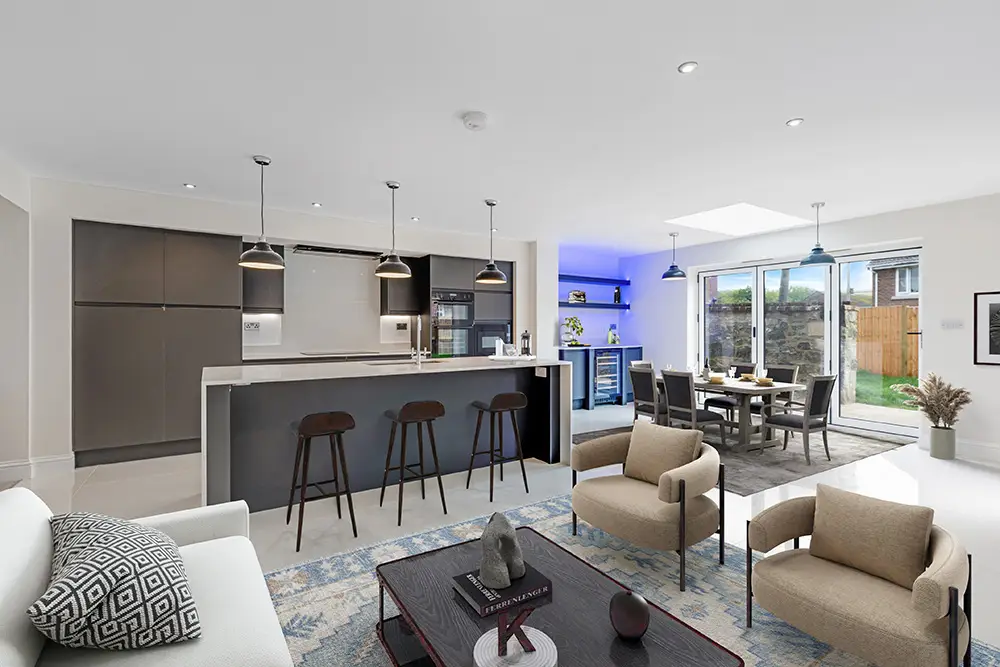
Virtual staging digitally furnishes empty rooms, while traditional staging uses physical furniture. Compare cost, speed, realism and when to use each.
Self-Serve AI vs Done-for-You Property Media — Which Path Fits?
Some teams want software and speed. Others want to upload and walk away. Compare self-serve AI in ReHub Studio with done-for-you media paths so you choose the right operating model.